
Word Search Printable Free – With Answer Key
I wanted these word searches to feel like the kind of printable you save because you know it will actually get used.
So instead of filling twenty grids with random words, I gave every puzzle its own little world – dinosaurs, outer space, ocean animals, fairy tales, winter, and more.
I also varied the difficulty, because a five-minute confidence boost and a longer brain teaser should not look exactly the same.
These 20 kids word search printables are simple to print, easy to understand, and much more interesting than another plain worksheet.
Let’s jump in!
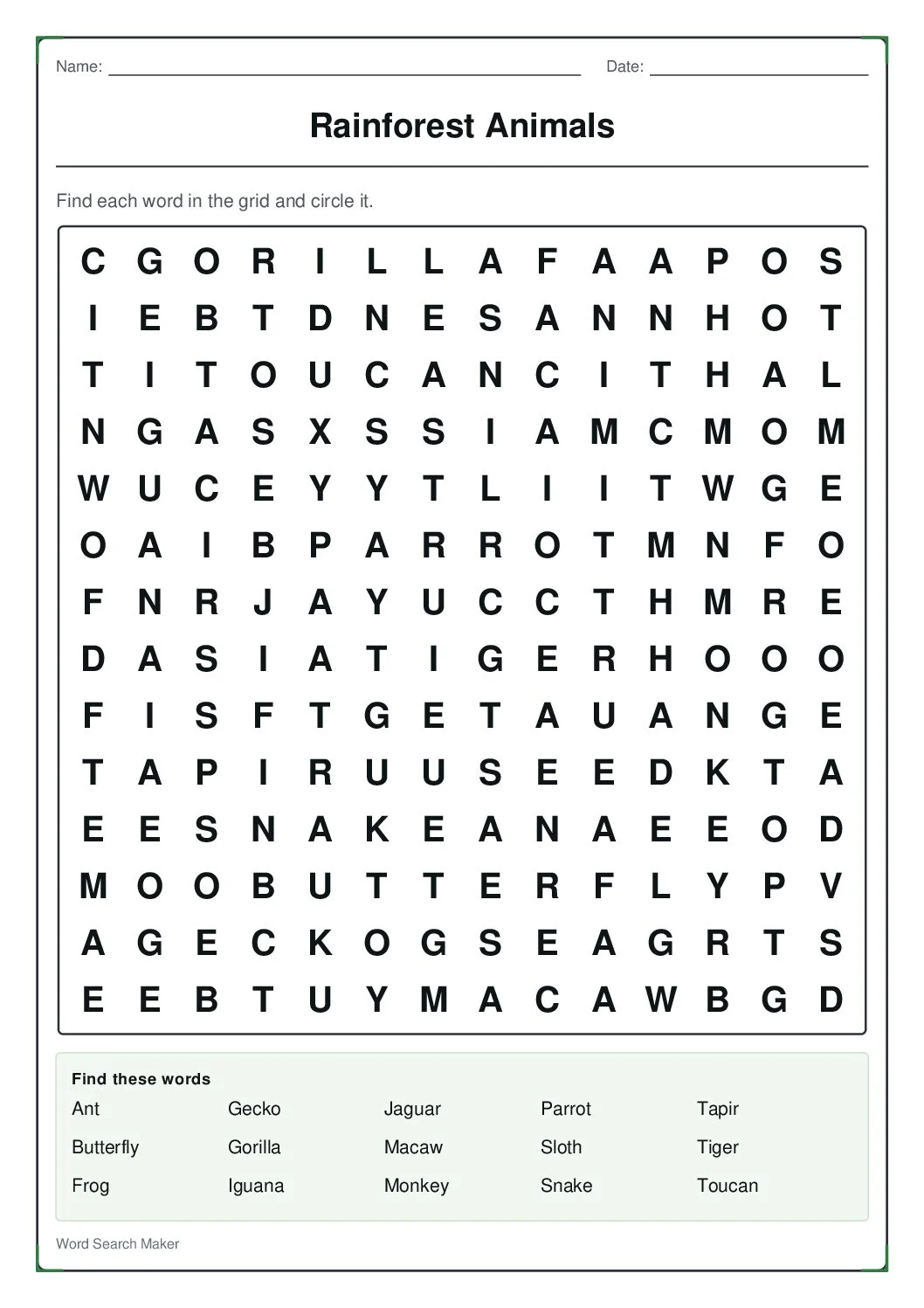
Rainforest Hunt
I made this medium-level puzzle around rainforest animals kids are likely to recognize, with a few trickier names mixed in to slow them down.
Words like jaguar, toucan, sloth, tapir, and macaw give the search a clear theme while quietly building animal vocabulary at the same time.
Space Search
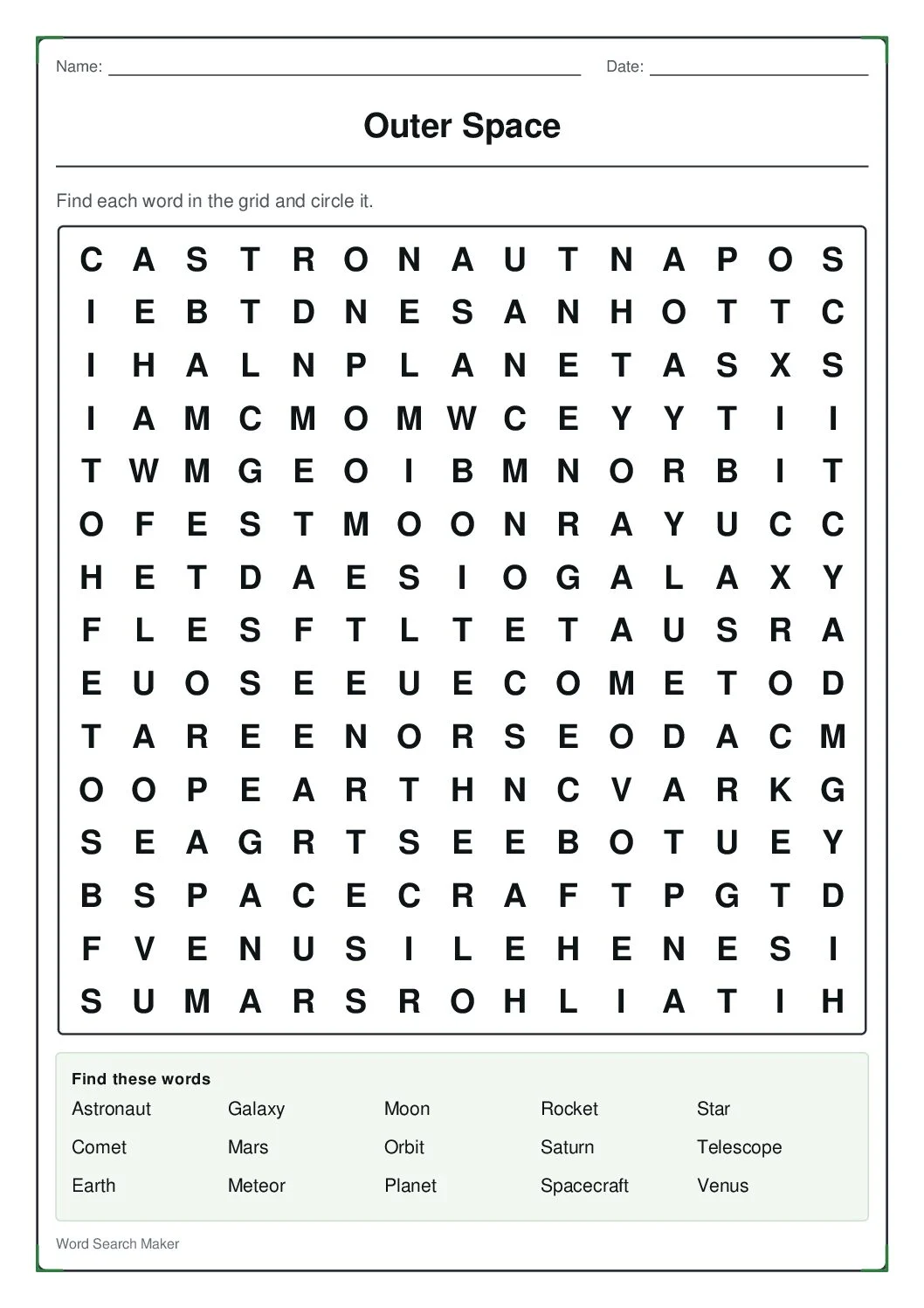
This one leans into the words kids usually hear when space starts feeling exciting – orbit, comet, galaxy, rocket, and astronaut.
I kept it at a medium level so the puzzle still moves quickly, but longer words like telescope and spacecraft add just enough challenge.
Dinosaur Dig
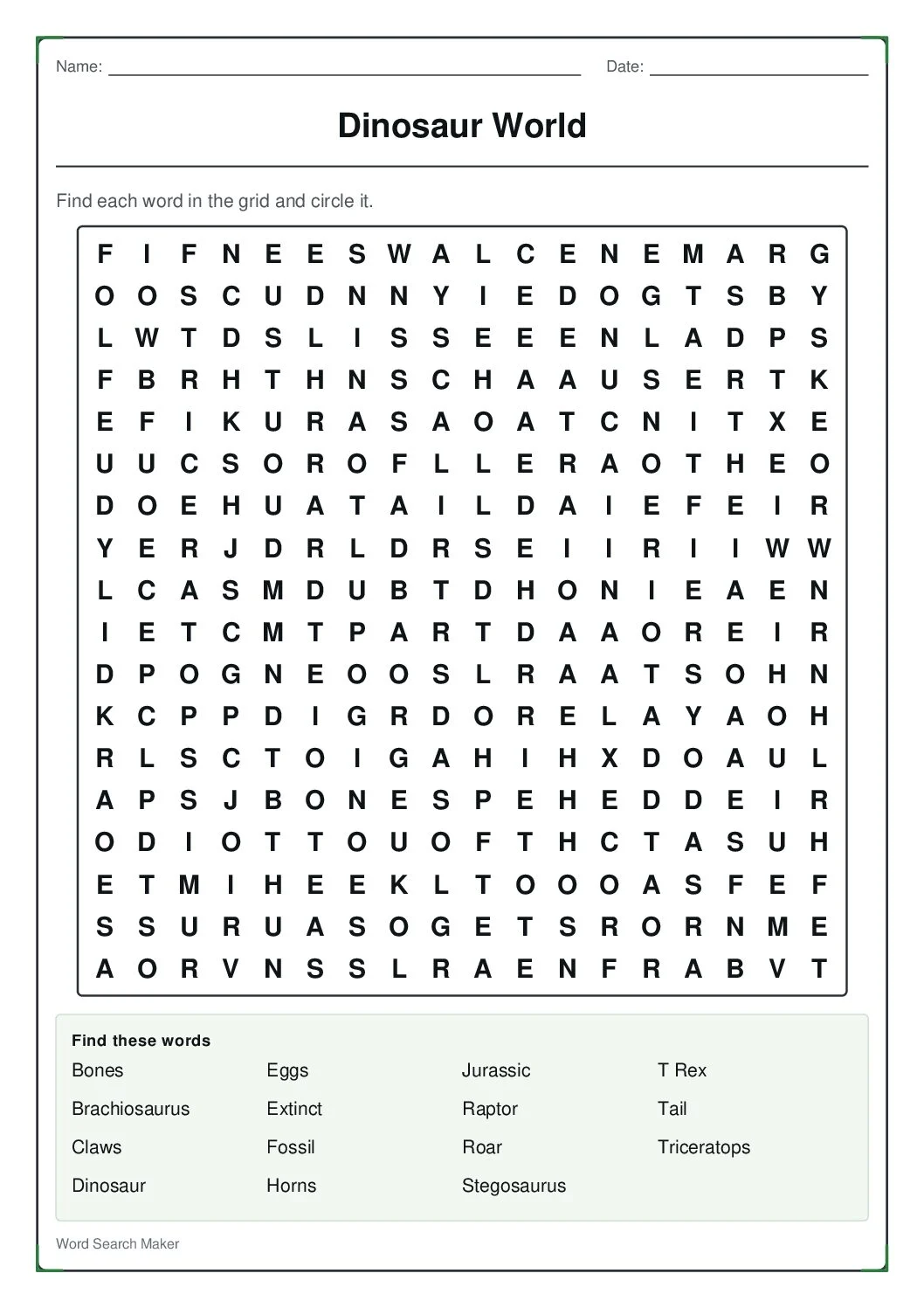
I made this one harder on purpose because dinosaur names naturally bring longer spellings into the grid.
Finding Triceratops, Stegosaurus, and Brachiosaurus turns the puzzle into a stronger word-recognition challenge while still keeping the theme playful for kids.
Ocean Search
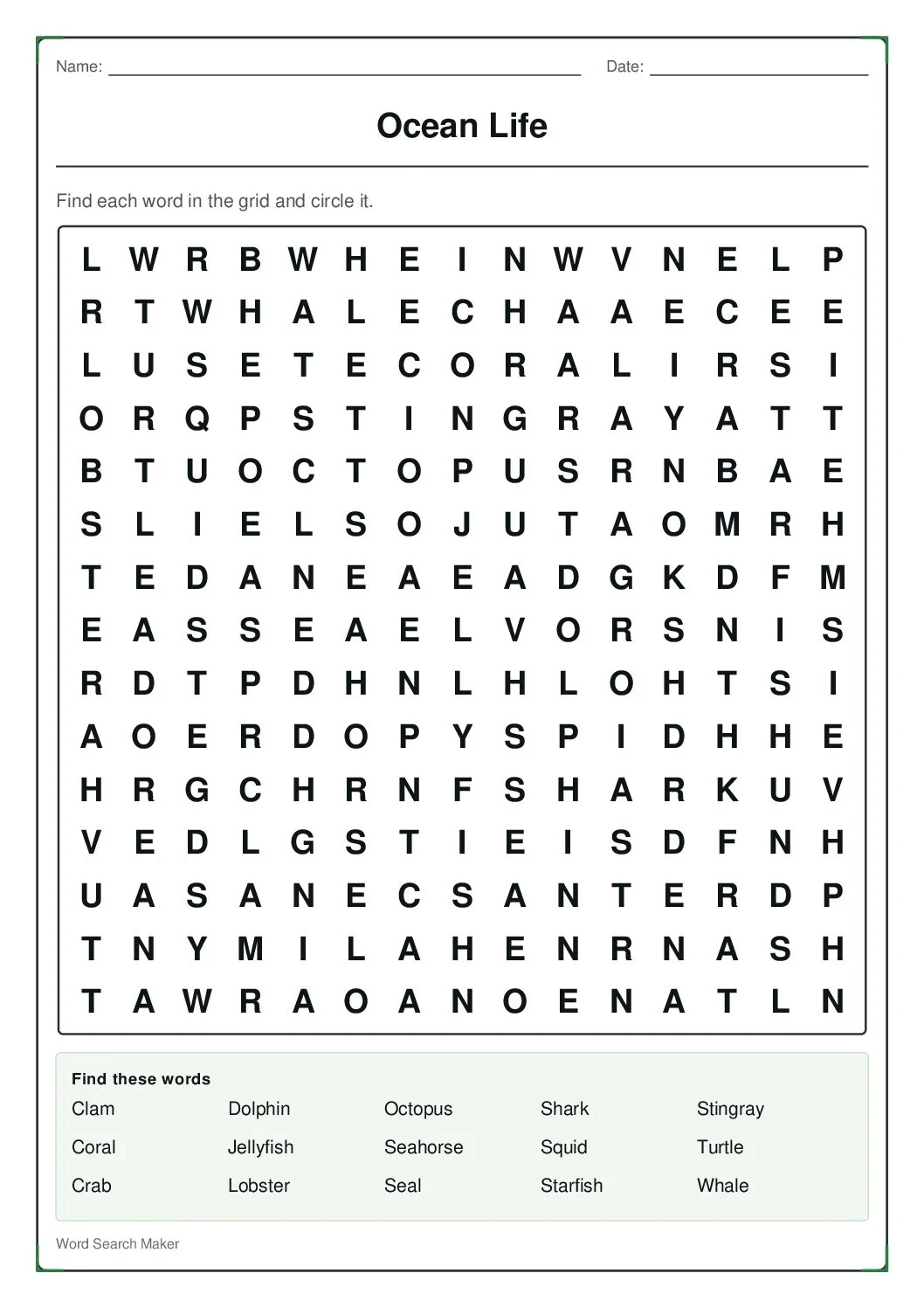
I like this worksheet because the vocabulary stretches beyond the obvious shark and dolphin picks.
With seahorse, stingray, jellyfish, lobster, and coral tucked into the grid, kids get a broader look at ocean life while working through a medium-level search.
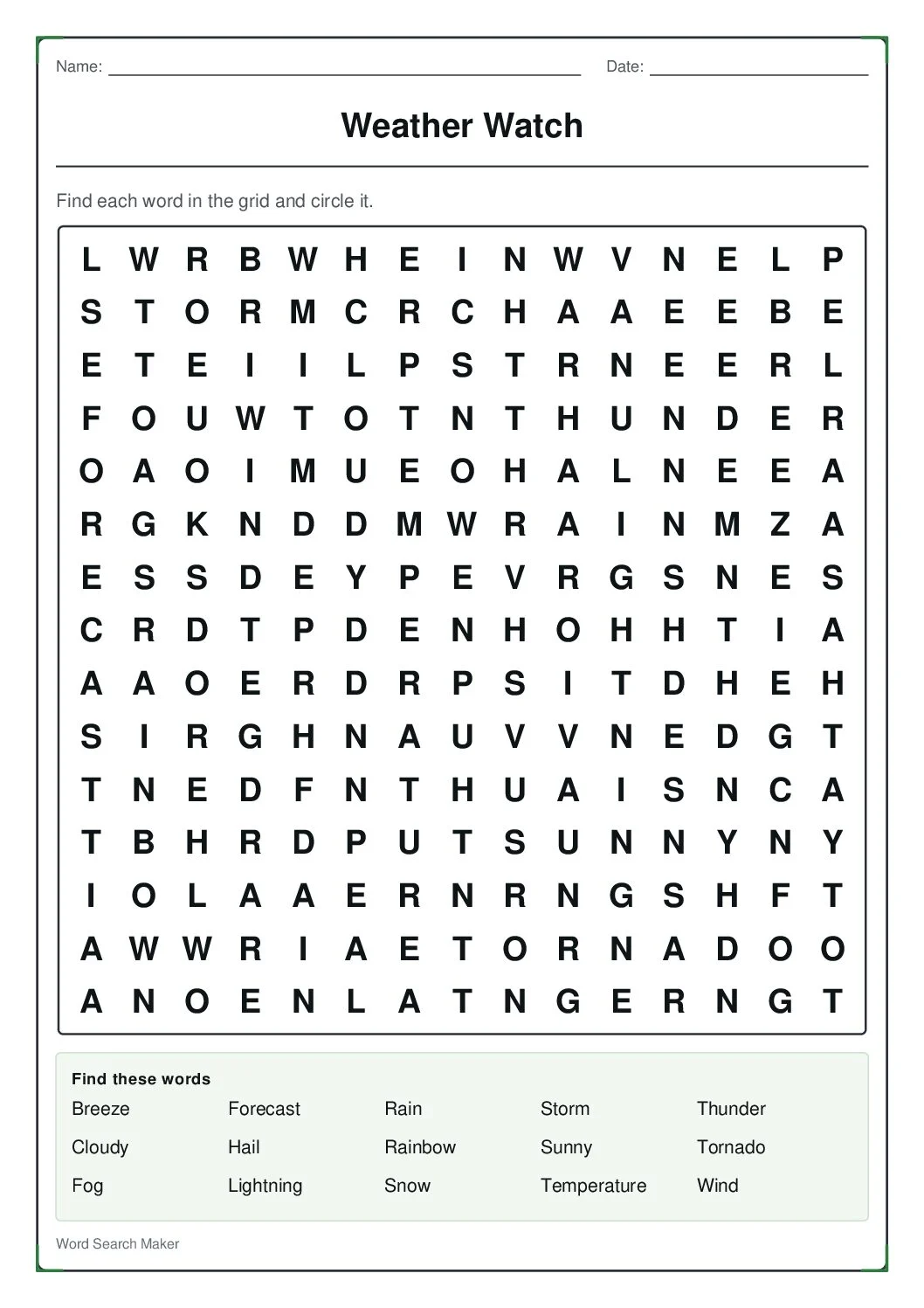
Weather Watch
I built this puzzle around weather words kids can connect to what they actually see outside, from rain and fog to thunder and hail.
The medium-level mix also brings in forecast and temperature, so the worksheet adds useful everyday vocabulary without making the grid feel too advanced.
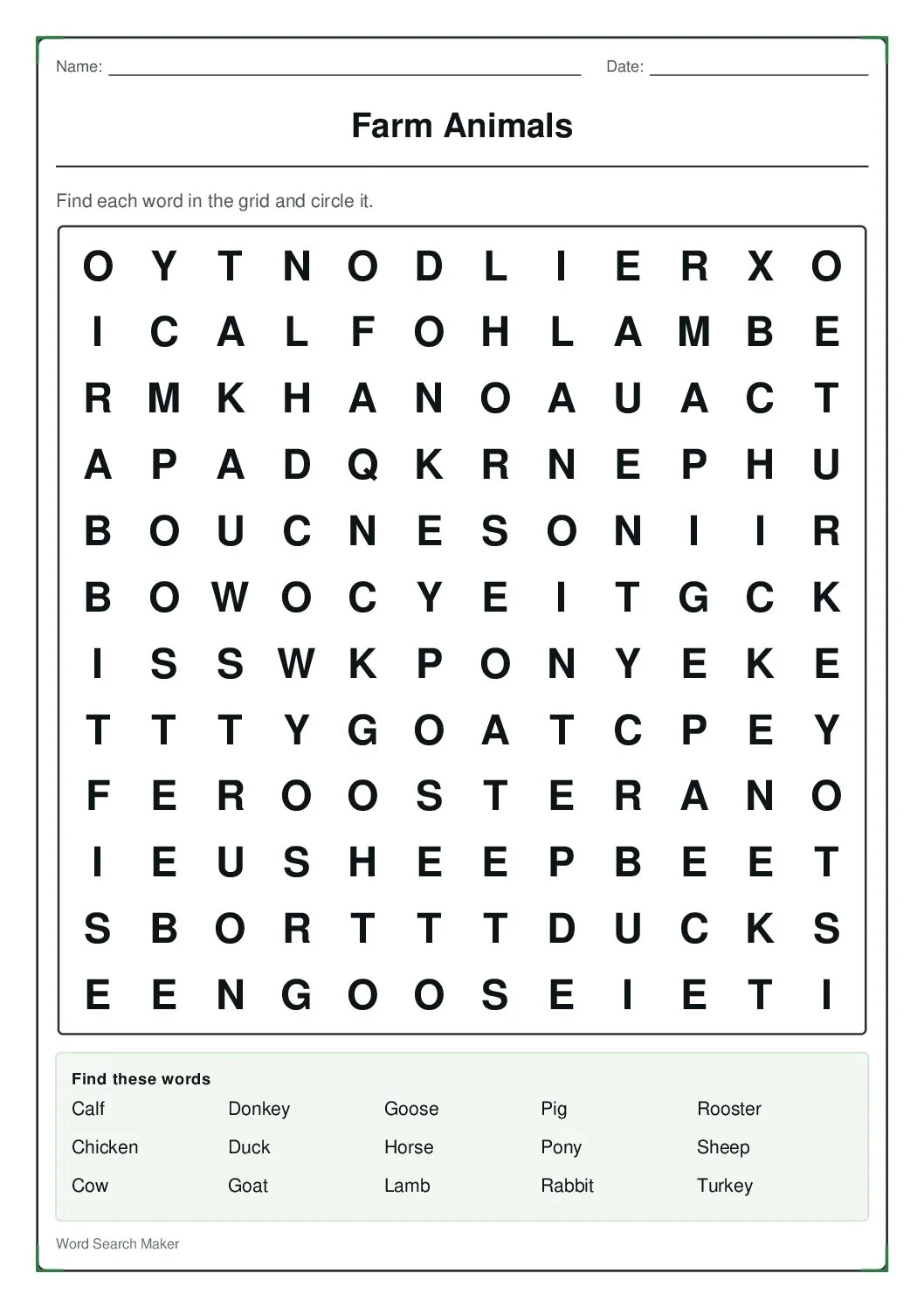
Farm Friends
I kept this one easy, using familiar names such as cow, horse, pig, duck, and rabbit so younger kids can settle into the search quickly.
Adding calf, lamb, pony, and rooster gives the grid a little variety without pushing the vocabulary beyond an early-reader level.
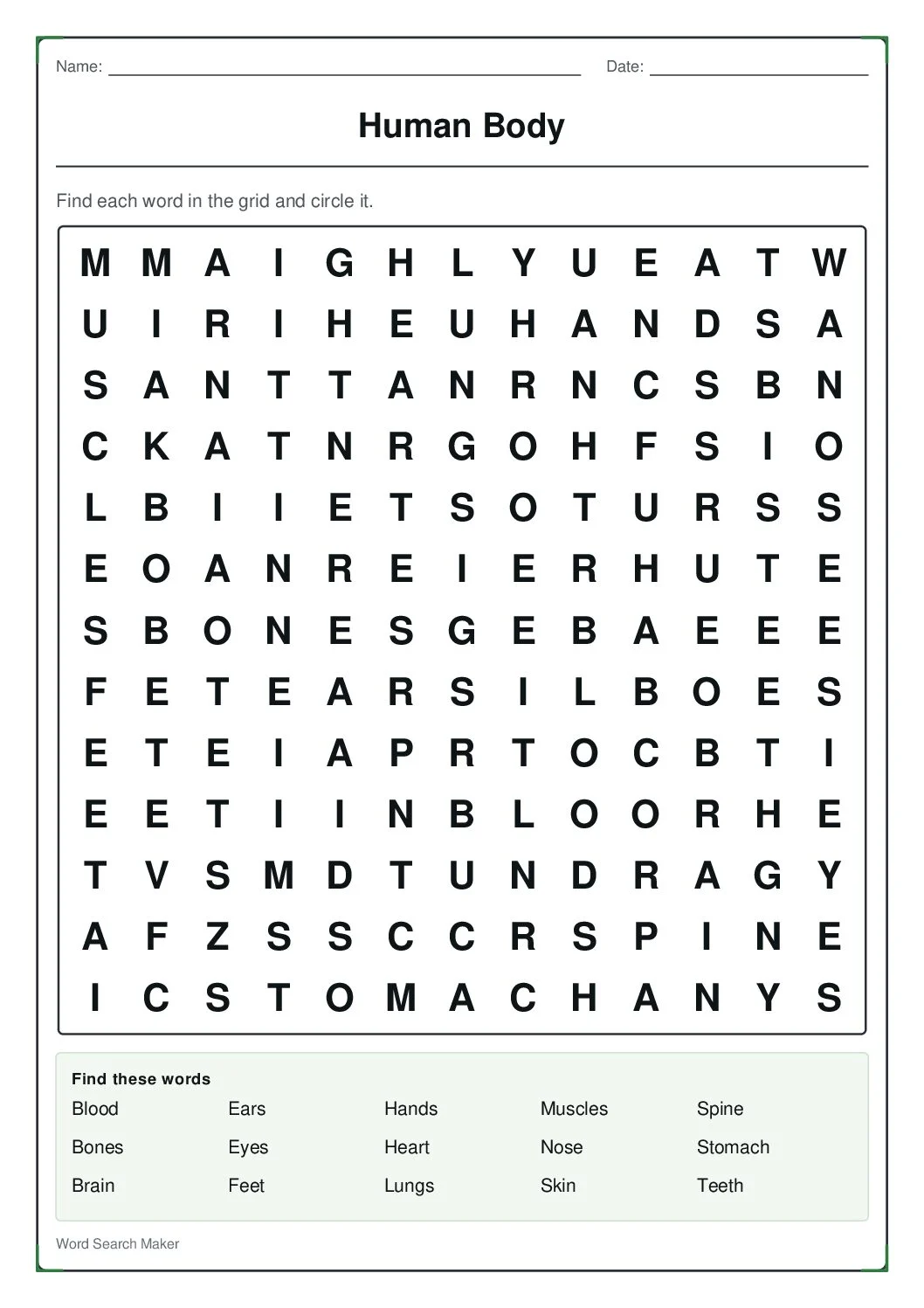
Body Basics
I used this worksheet to bring together body words kids hear often, including brain, heart, lungs, muscles, and spine.
The medium-level search gives them a simple way to reinforce basic anatomy vocabulary without turning the activity into a science lesson.
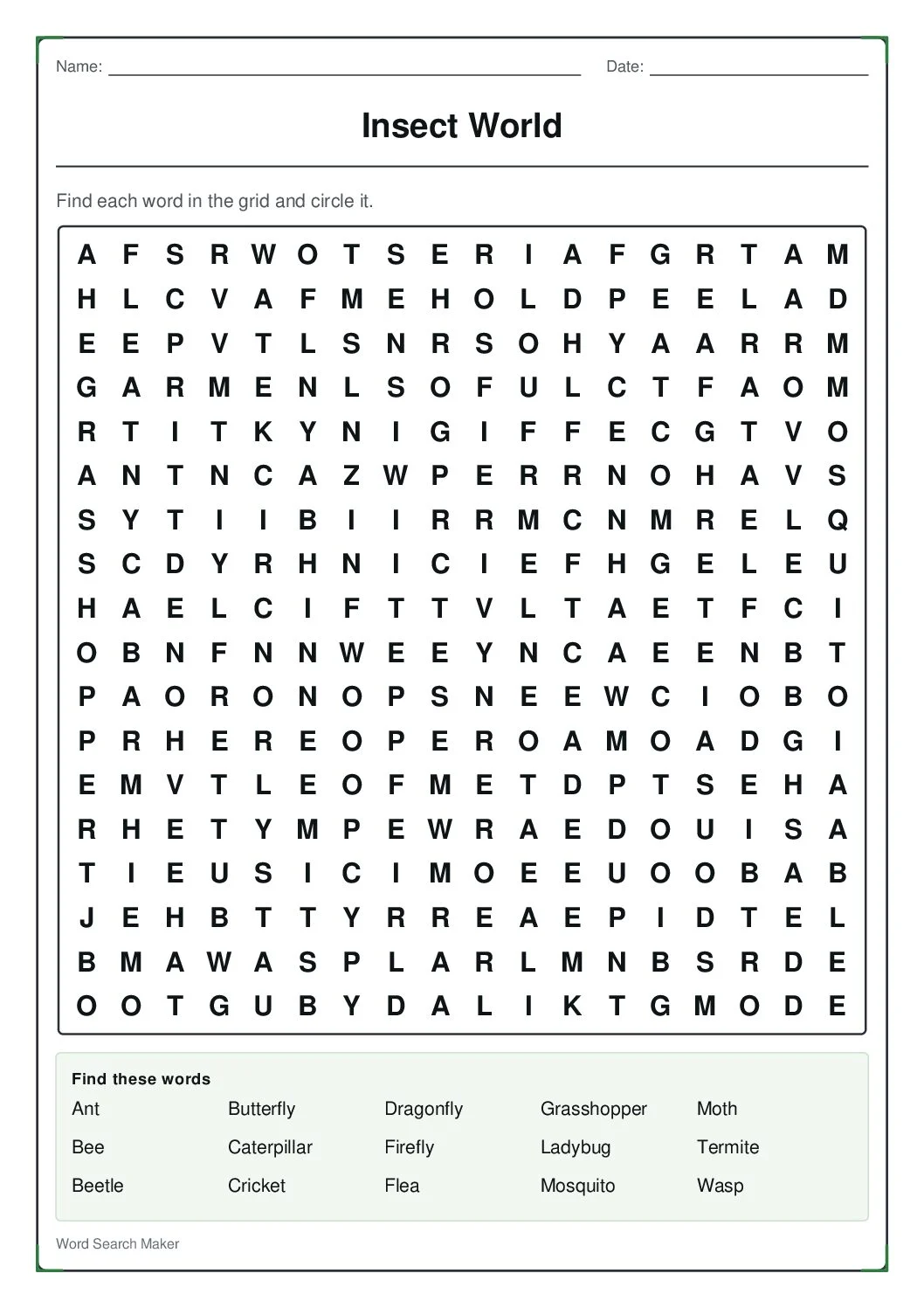
Bug Hunt
This harder puzzle gets interesting once kids move past the easy finds and start spotting words like dragonfly, grasshopper, caterpillar, and mosquito.
I wanted the grid to feel packed with movement, so the insect names vary in length and make the search noticeably more challenging.
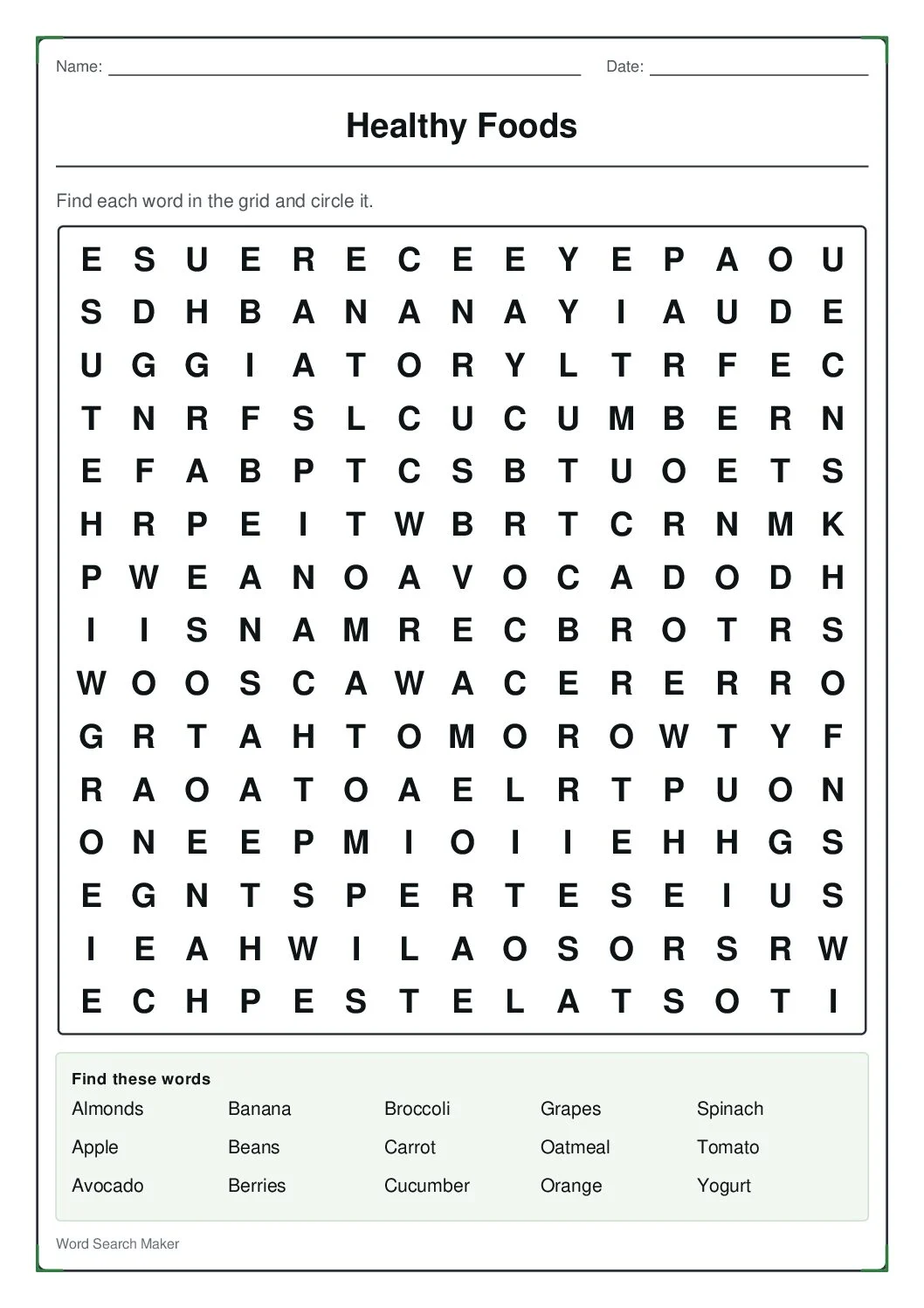
Food Finder
I choose everyday foods for this grid so the vocabulary feels familiar before the searching even begins.
Apple and banana offer quick wins, while broccoli, avocado, oatmeal, and cucumber make this medium puzzle a little more demanding.
School Search
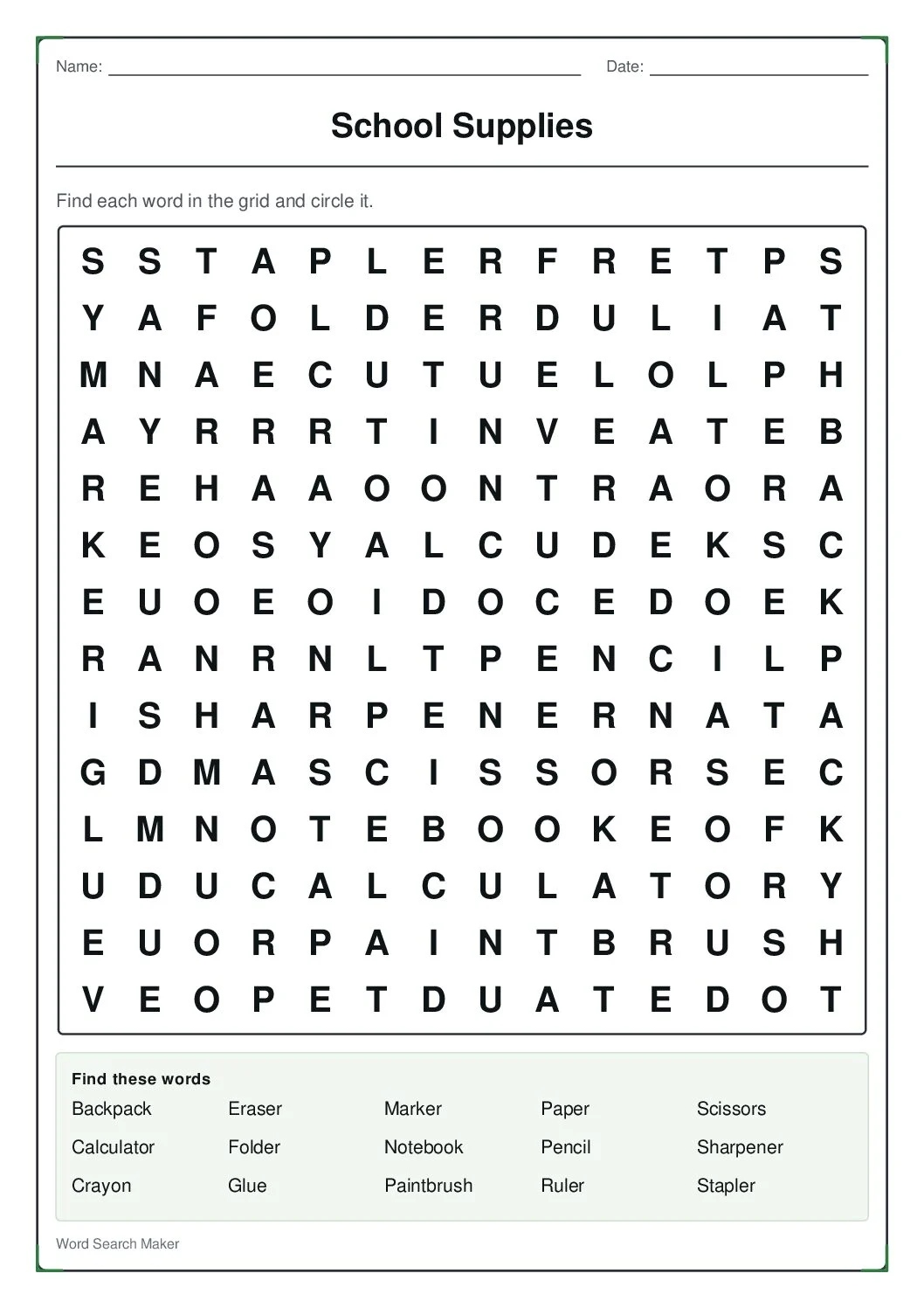
This easy worksheet pulls its words straight from the things kids see around a classroom, which makes the grid feel instantly familiar.
Pencil, ruler, notebook, backpack, scissors, and calculator keep the search practical while reinforcing everyday school vocabulary.
Camp Quest
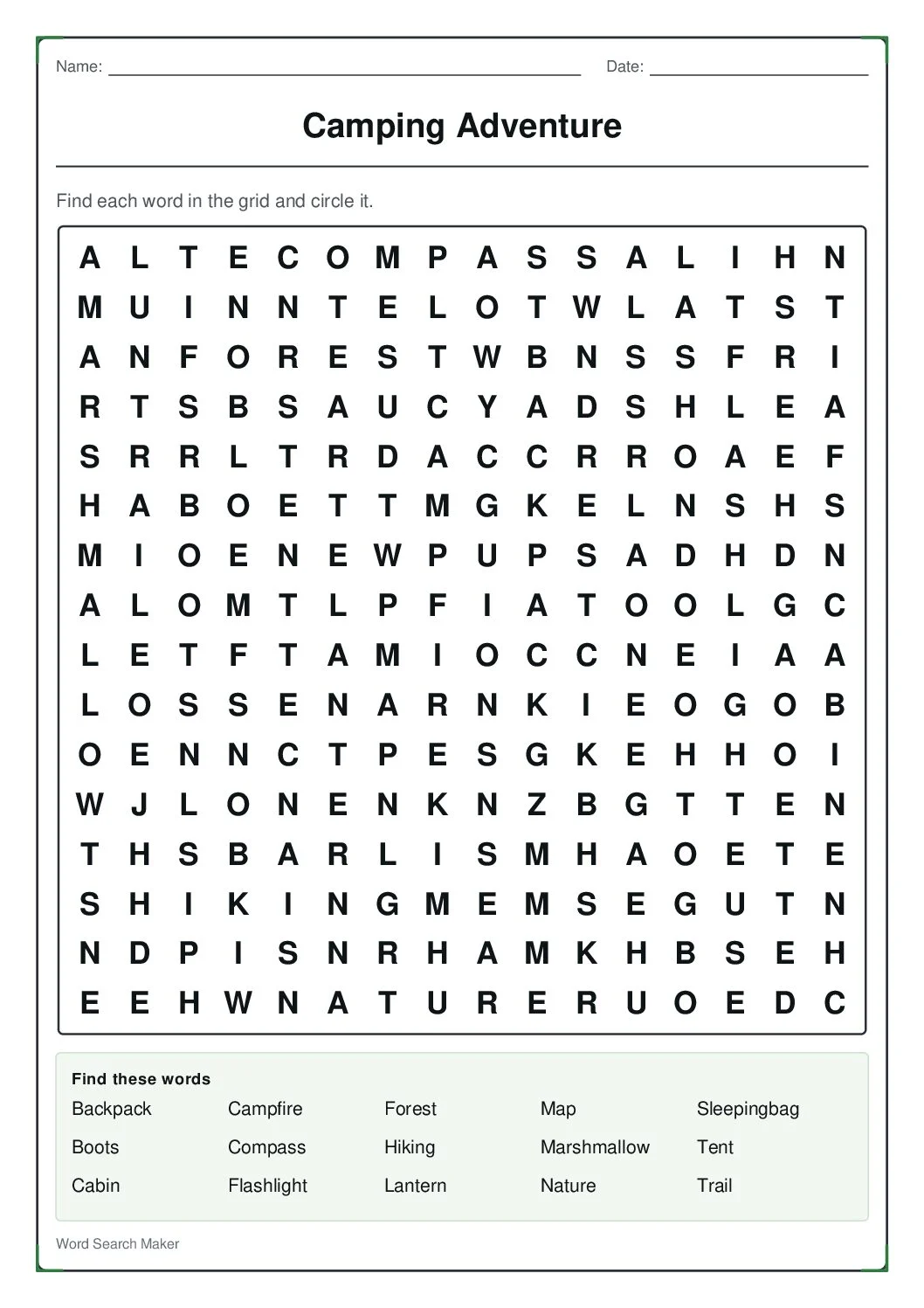
I gave this worksheet a little outdoor feel by using words that belong around a campsite, from tent and lantern to trail and compass.
Backpack, sleeping bag, flashlight, and marshmallow make the medium-level search feel like a tiny camping checklist hidden inside the grid.
Arctic Search
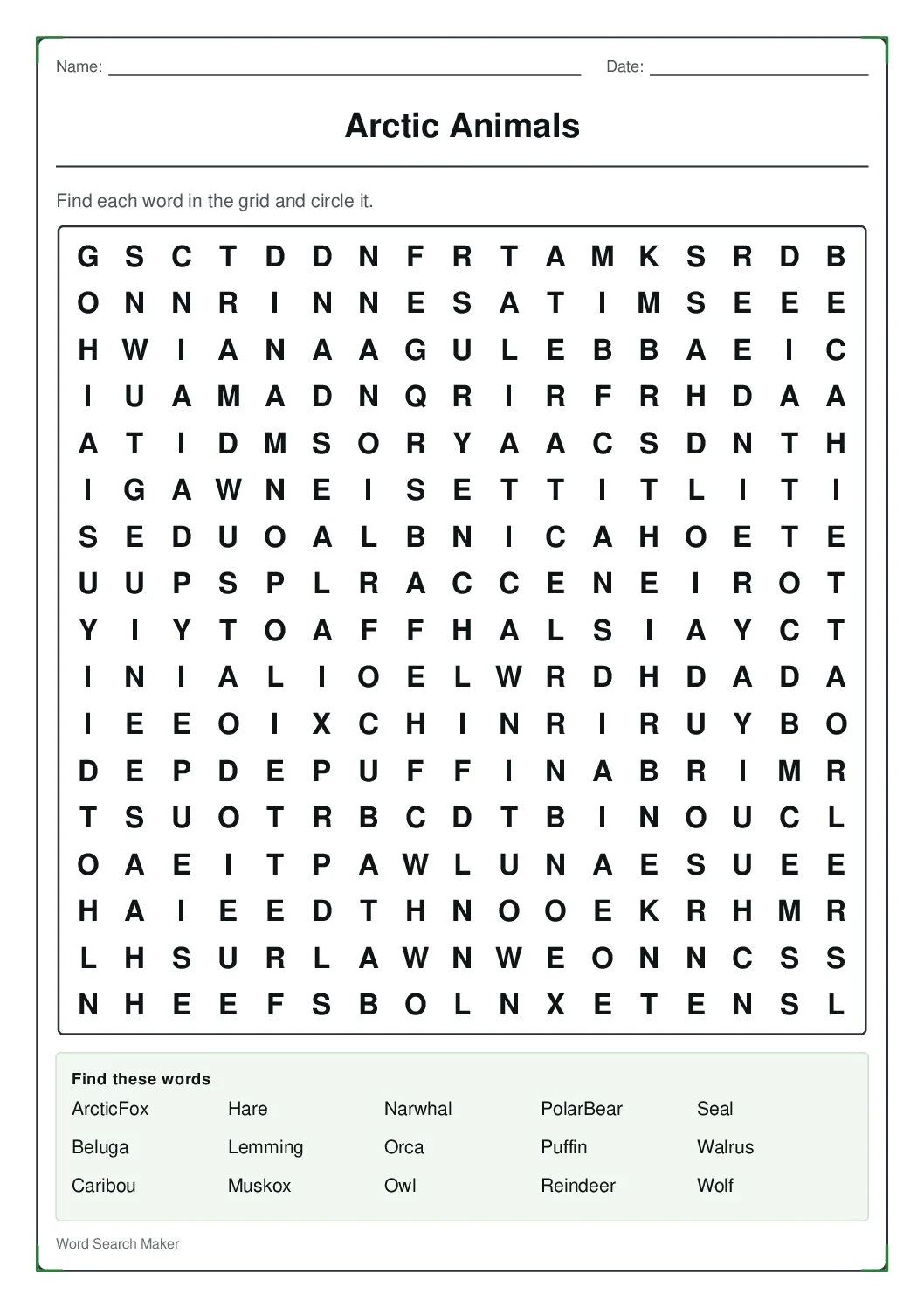
This harder grid brings in animals kids may not see in everyday books, especially narwhal, muskox, lemming, and beluga.
I like how the mix of short and long names makes the search feel more adventurous while introducing vocabulary from one very specific habitat.
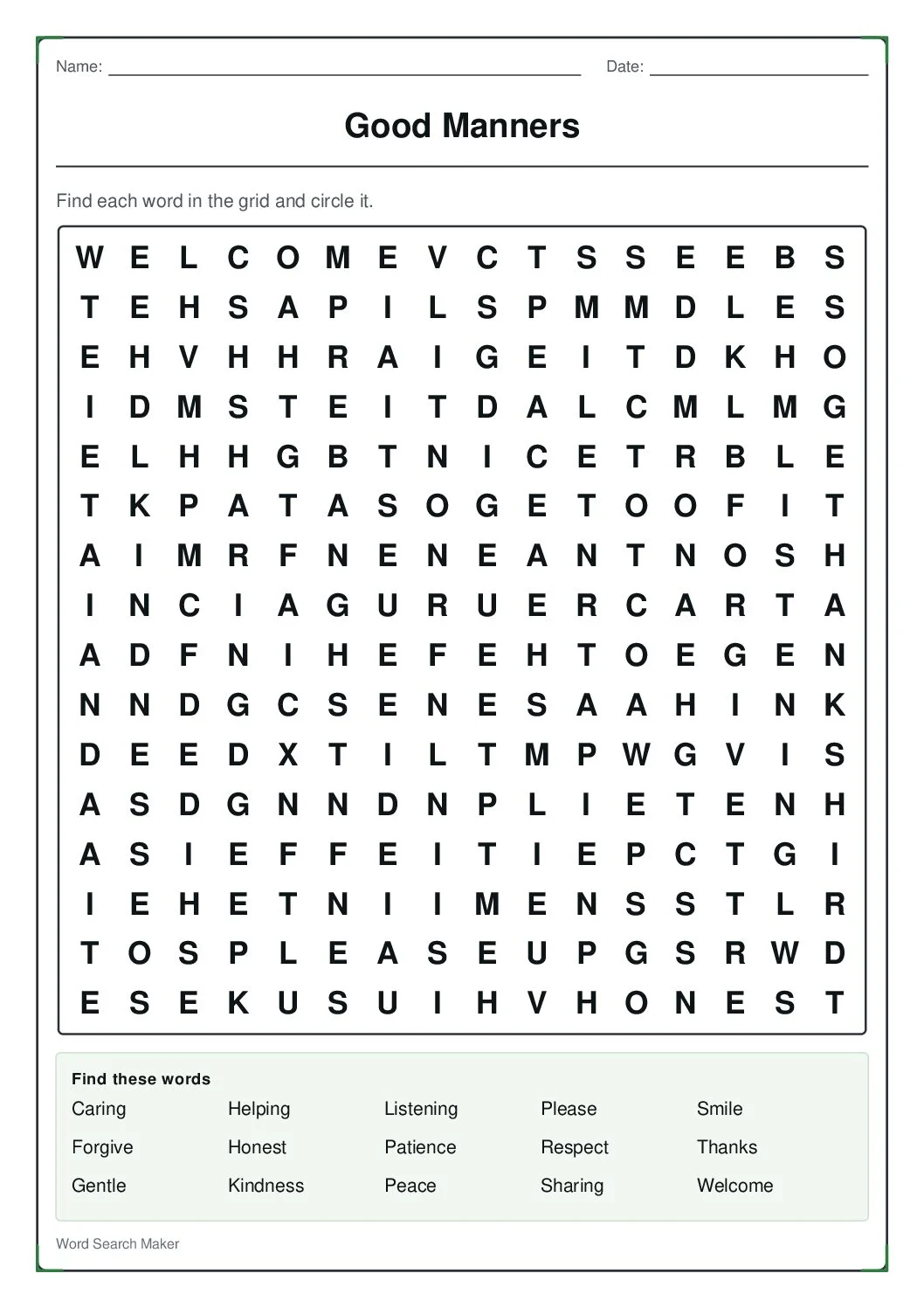
Kindness Hunt
I filled this medium-level grid with words that reflect the everyday manners I want kids to recognize, from patience and honesty to sharing and helping.
Longer finds like kindness, listening, and respect add a useful challenge while keeping the whole worksheet centered on positive character.
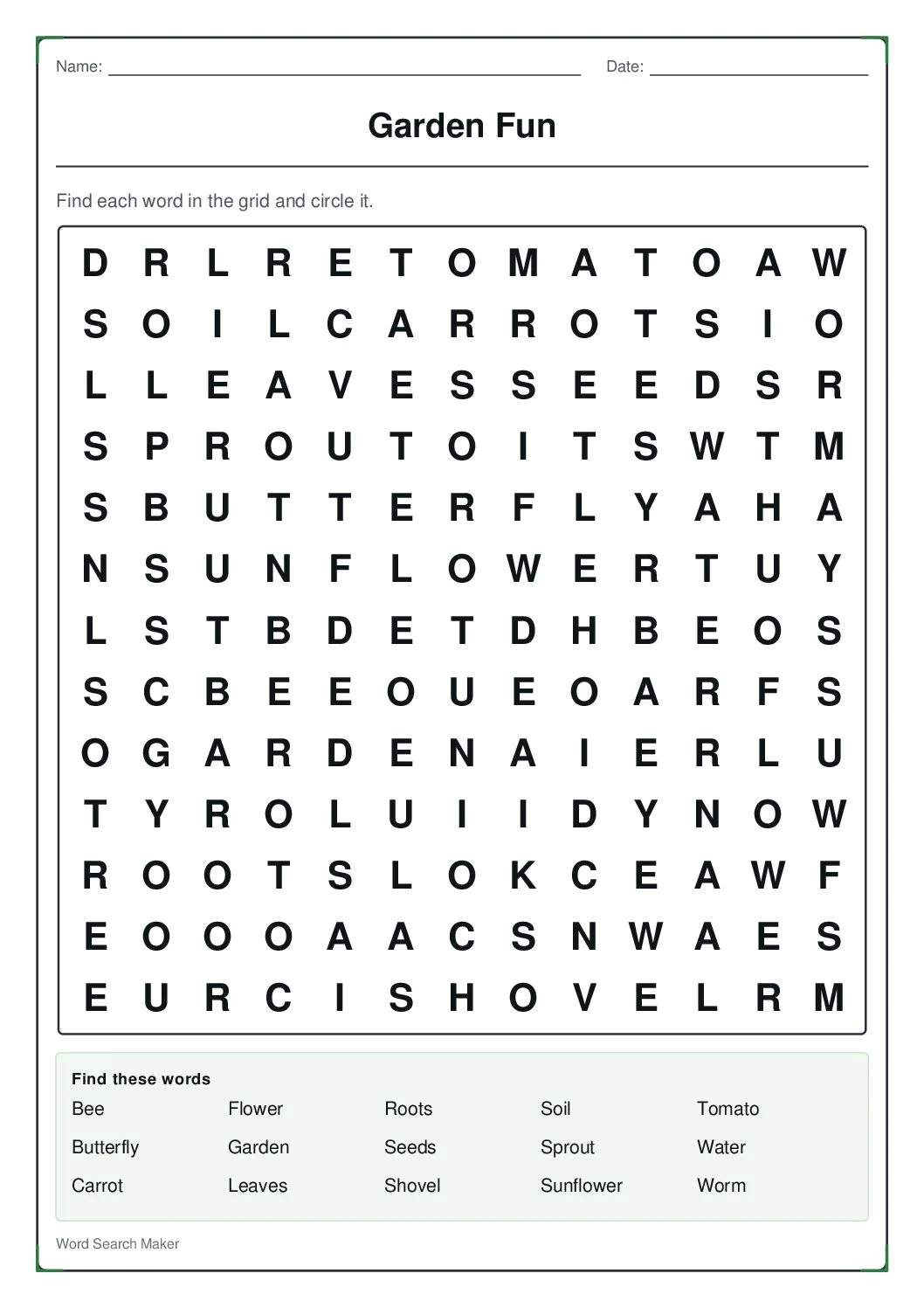
Garden Grow
I shaped this easy puzzle around the small things kids notice when a garden starts changing – seeds, sprouts, roots, leaves, and flowers.
Words like soil, shovel, bee, worm, and sunflower make the grid feel connected to real garden life instead of just another nature worksheet.
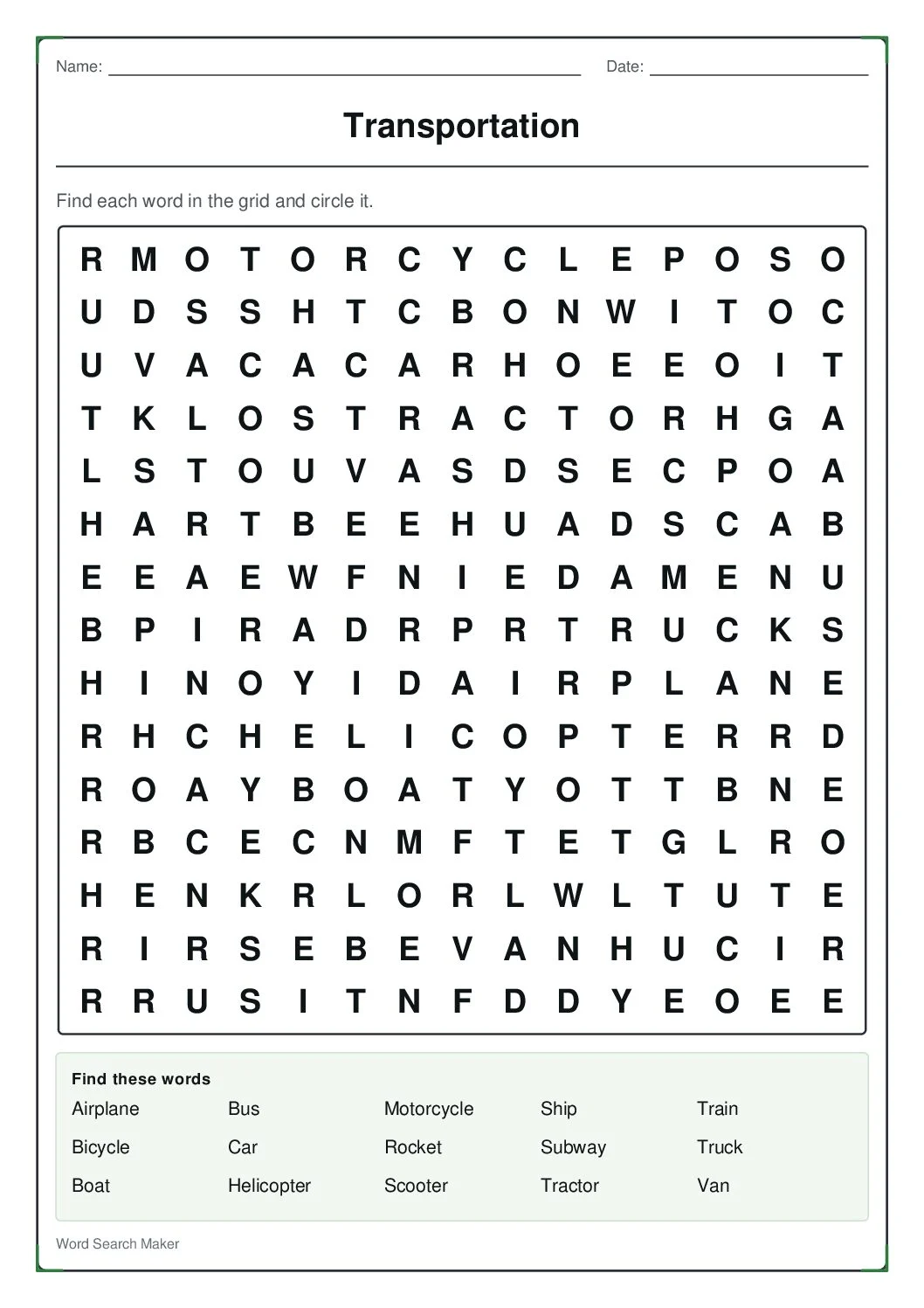
Moving Around
I wanted this grid to show just how many different ways people travel, so it moves from bicycles and buses to airplanes and ships.
The medium level comes from longer finds like helicopter, motorcycle, and tractor, which make kids scan the grid more carefully.
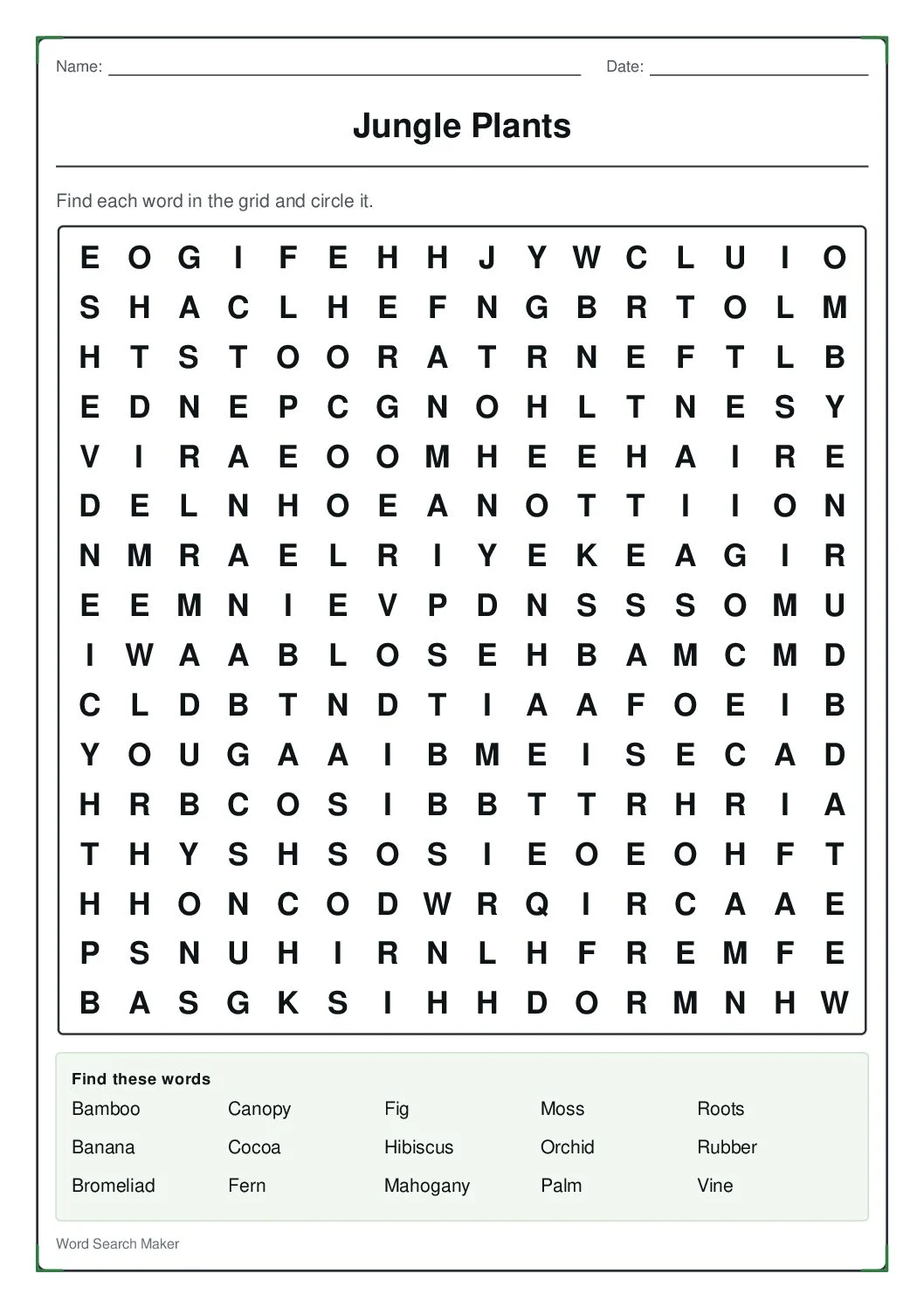
Jungle Plants
I made this harder search around the plants that give a rainforest its dense, layered look, including bamboo, orchids, vines, moss, and palms.
Cocoa, rubber, bromeliad, mahogany, and canopy add less familiar words that make the grid feel richer and noticeably more challenging.
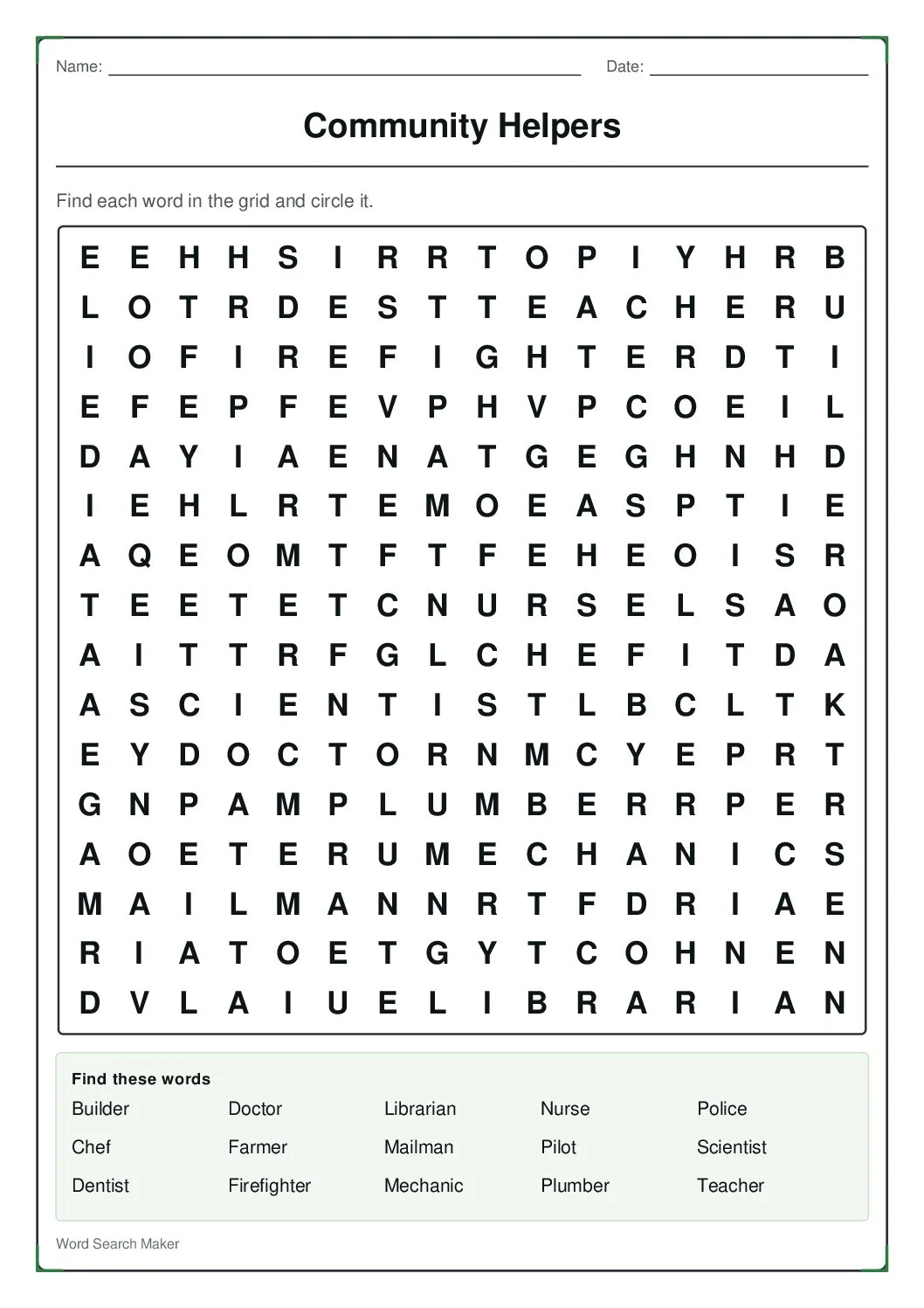
Helper Hunt
I built this medium-level puzzle around the people kids regularly see helping a community run, from teachers and nurses to mechanics and firefighters.
Including librarian, plumber, scientist, and pilot widens the vocabulary and gives the worksheet more variety than the usual classroom job list.
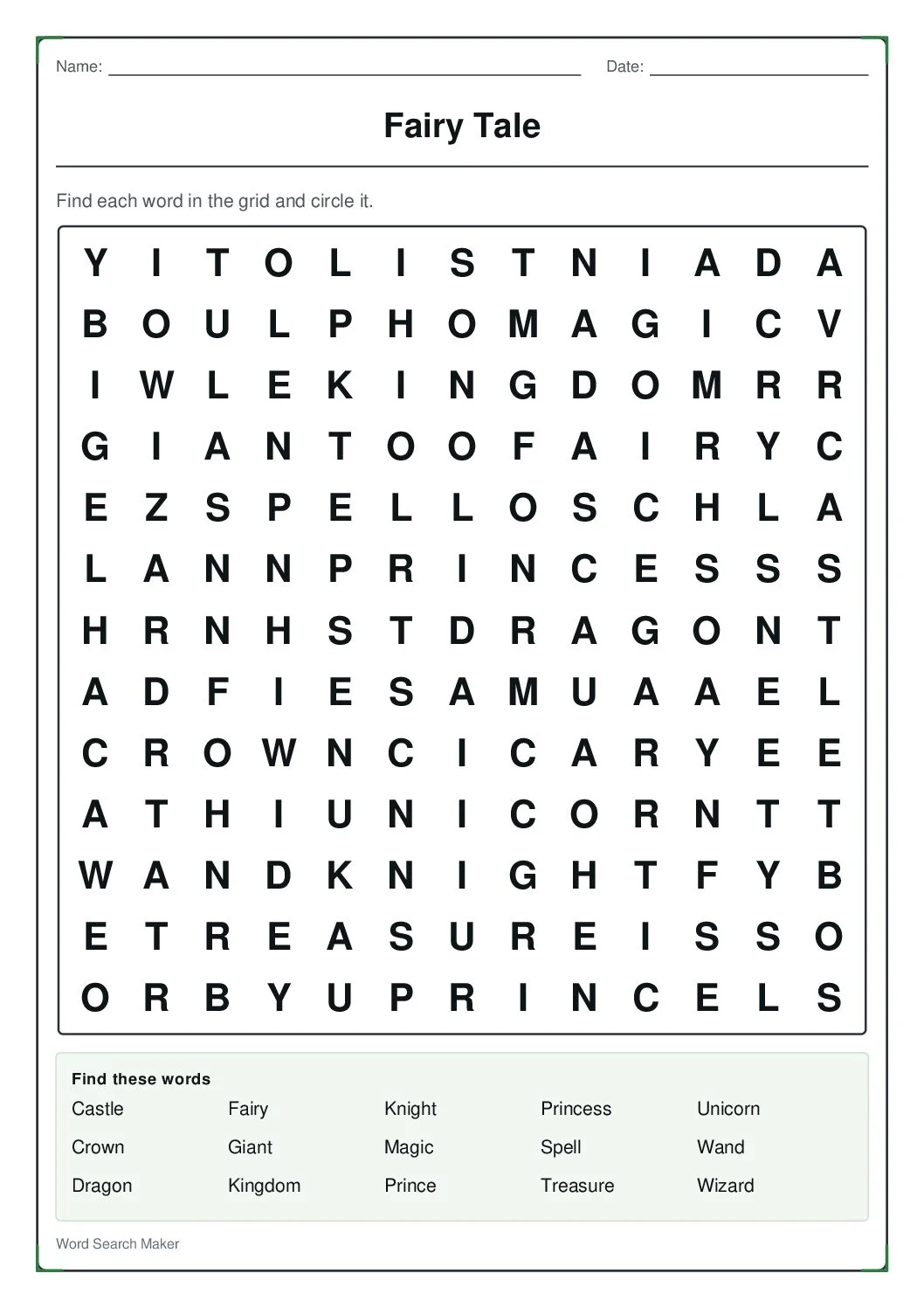
Fairy Quest
I kept this one easy by filling the grid with storybook words kids usually recognize right away, like castle, dragon, fairy, crown, and magic.
Adding knight, kingdom, unicorn, wand, and giant gives the puzzle a full fairy-tale feel without making the search too tricky.
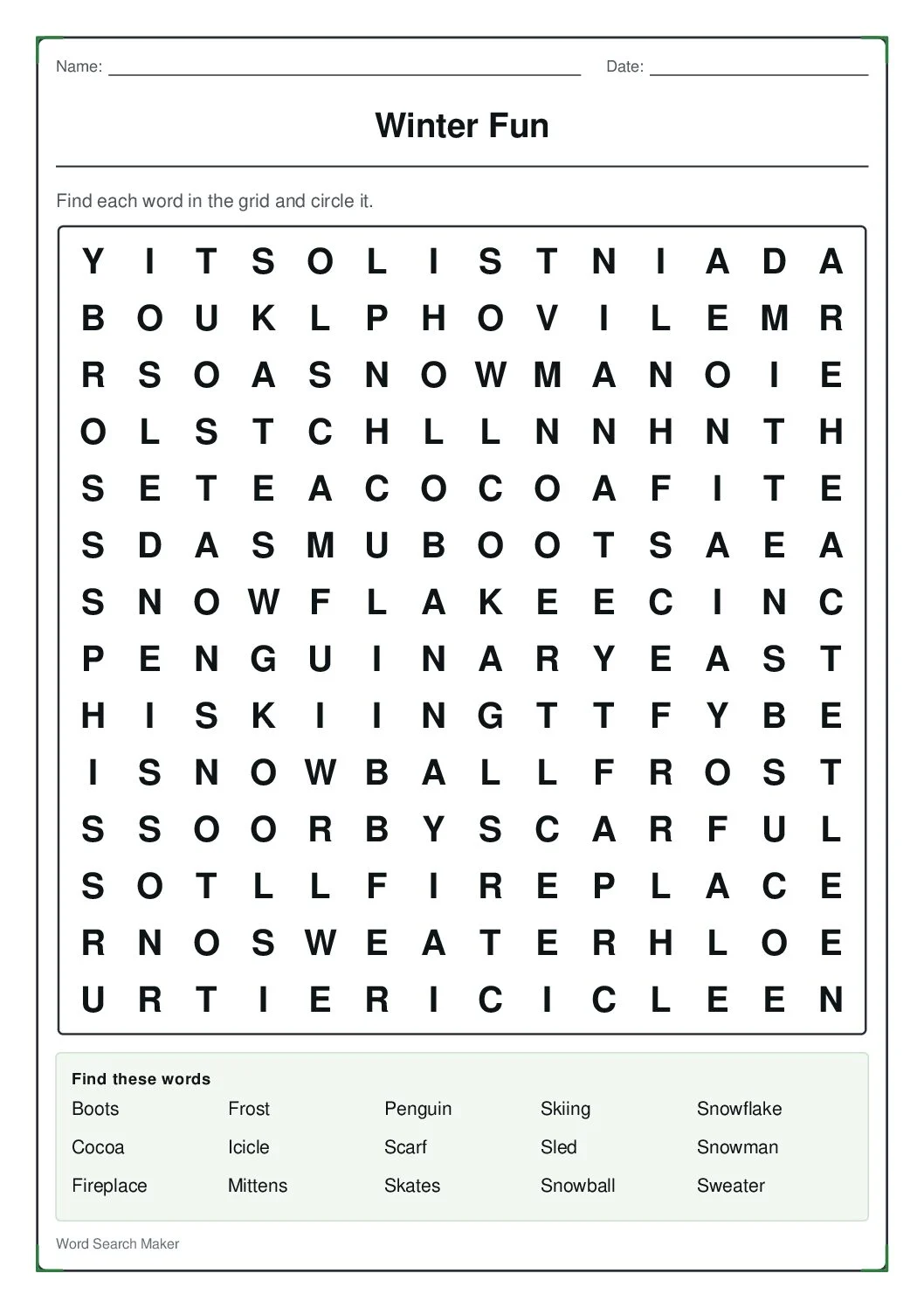
Winter Search
This easy grid feels like a cold-weather day packed into one page, with snowman, sled, mittens, skates, and snowflakes hiding throughout.
I added cocoa, fireplace, frost, and icicle to give the puzzle a warmer seasonal mix instead of repeating only snow-related words.
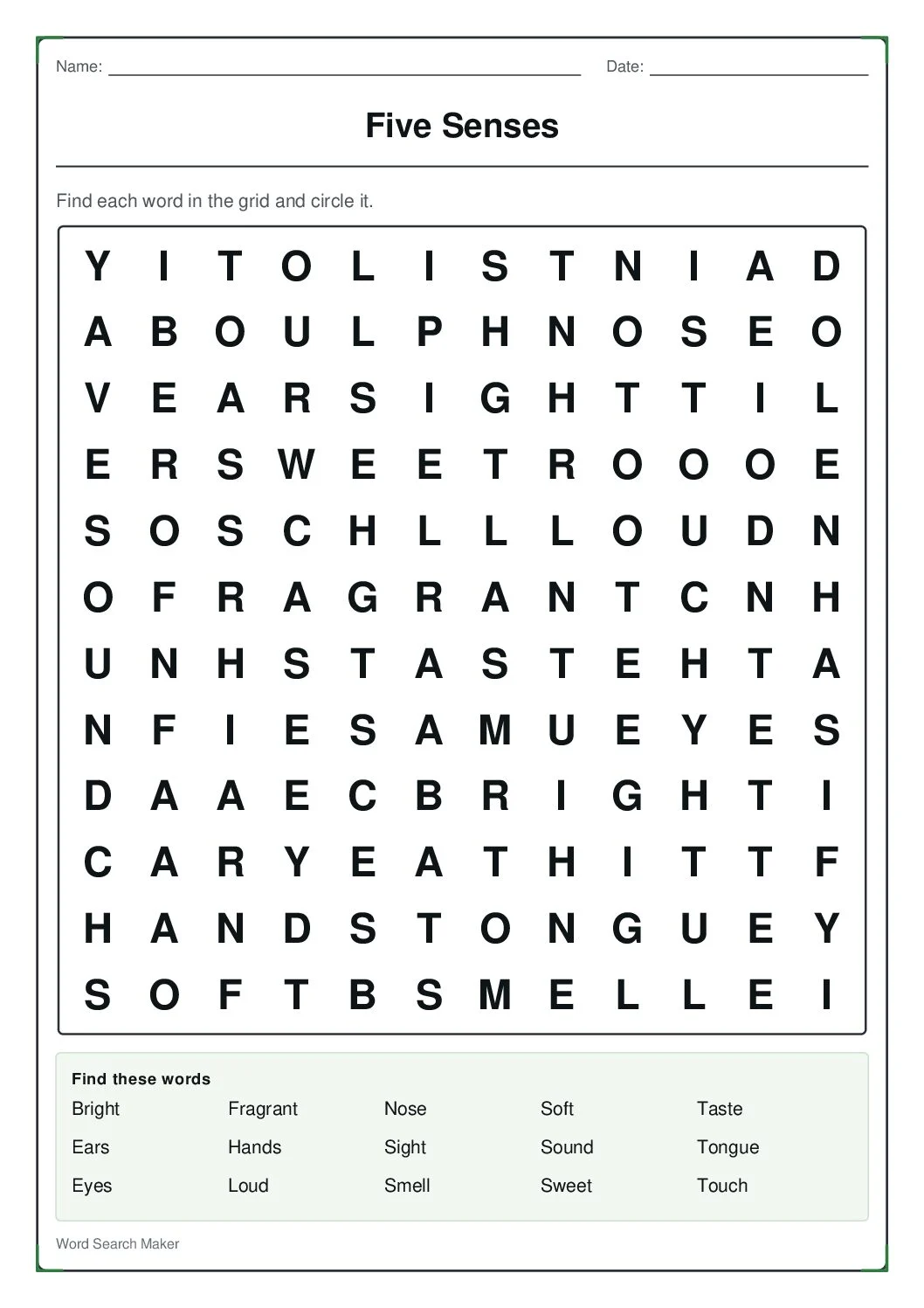
Sense Search
I built this easy puzzle around words kids can connect directly to everyday experiences, from seeing and hearing to tasting and touching.
Eyes, ears, tongue, bright, soft, and fragrant help turn the grid into a simple vocabulary review of how the five senses work.
Conclusion
I like this collection because every worksheet brings a different little challenge instead of repeating the same type of puzzle twenty times.
Some are quick confidence builders, while others ask kids to slow down and really scan the grid.
That mix makes the set useful for quiet time, classroom practice, travel days, or a simple screen-free activity at home.
I’d keep a few easy and harder pages together so kids can move up naturally as their word-search skills improve.